
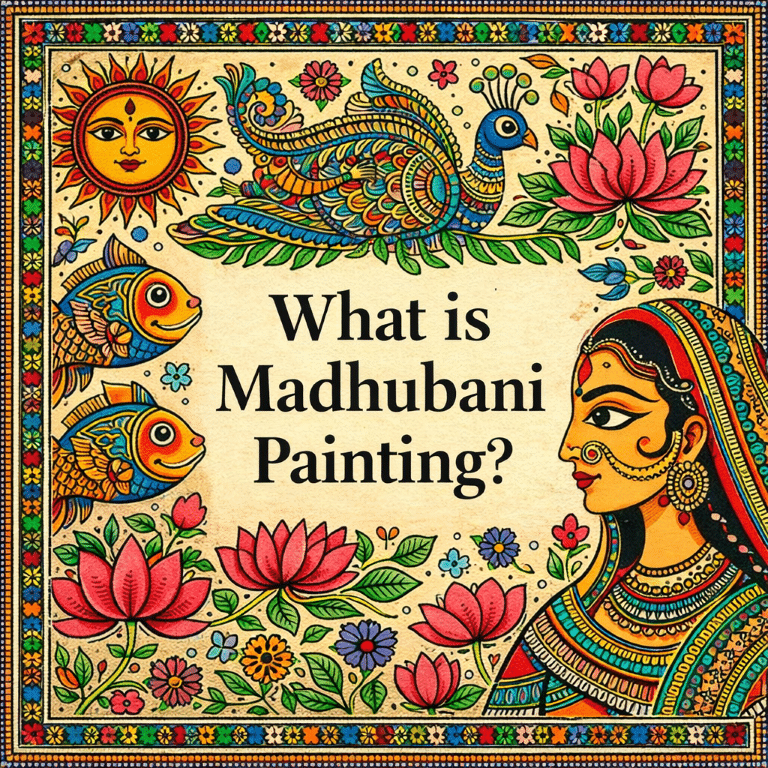
If you’ve ever searched what is Madhubani painting, you were probably drawn to its intricate patterns, bold outlines, and symbolic storytelling. But what is Madhubani painting beyond its visual appeal?
Madhubani art, also known as Mithila painting, is a traditional Indian art form that originated in the Mithila region of Bihar. It is one of India’s most recognized folk traditions, known for its flat perspective, vibrant natural colors, and deeply symbolic themes.
Understanding what is Madhubani painting means understanding that it is not just decorative art, it is a cultural narrative expressed through line, form, and repetition.
Today, Madhubani art is celebrated globally, appearing in galleries, modern homes, textiles, and contemporary design spaces.
Origin of Madhubani Painting
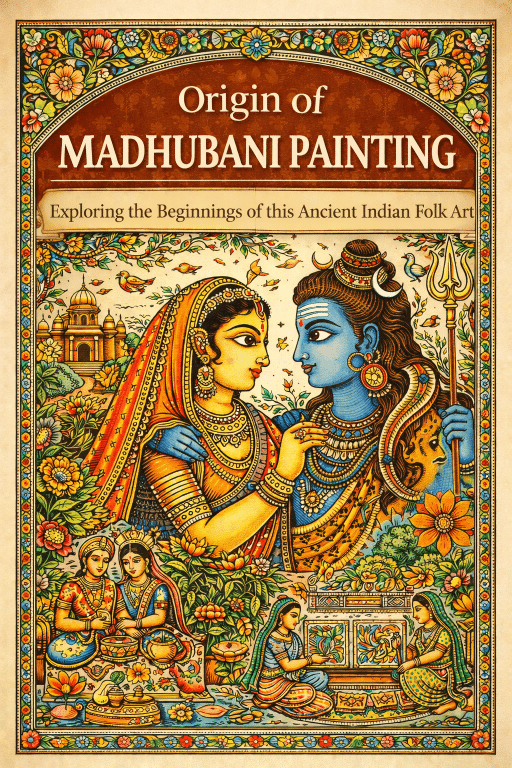
The origin of Madhubani painting is deeply rooted in mythology and rural life. According to local belief, this art form began during the time of the Ramayana, when King Janaka commissioned artists to decorate the city for the wedding of Sita and Lord Rama.
While mythology adds beauty to the story, historians trace the origin of Madhubani painting to the women of Mithila who painted on mud walls and courtyards during festivals and rituals.
The origin of Madhubani art reflects community life, devotion, and nature. Over time, this domestic wall art evolved into paper and canvas-based works, preserving traditional Madhubani art techniques while adapting to new formats.
Madhubani Painting History and Evolution
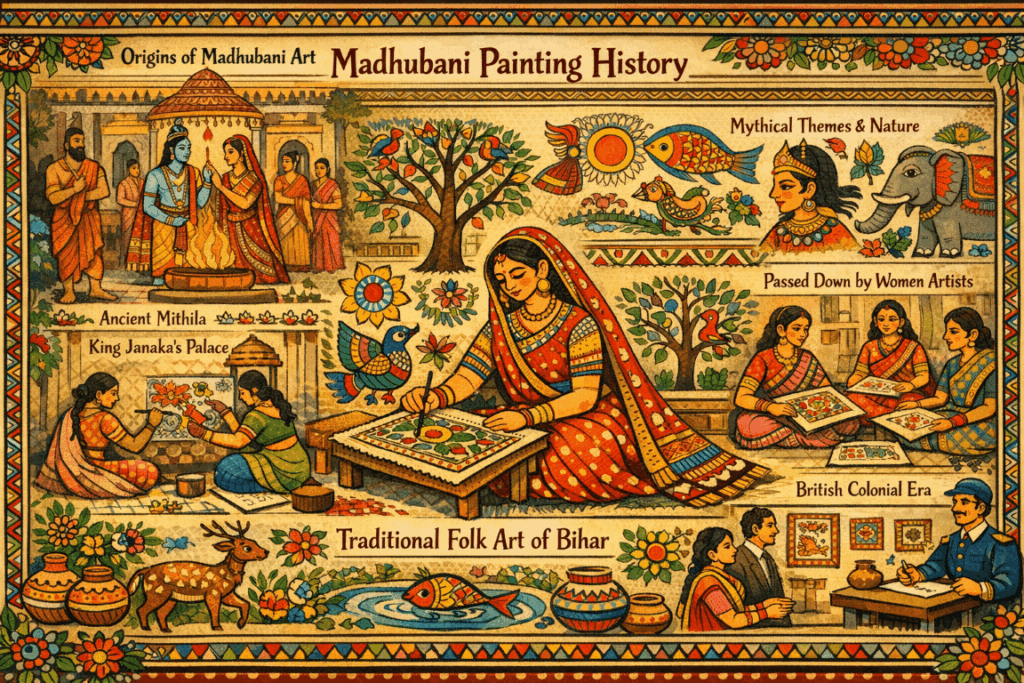
To truly understand what is Madhubani painting, one must explore Madhubani painting history.
Originally, Madhubani art was passed from mother to daughter. It was never formally taught, it was lived and practiced. In the 1960s, after a severe drought in Bihar, this art gained national attention when artists were encouraged to transfer wall paintings onto paper for livelihood.
This shift changed the trajectory of Madhubani painting history. It moved from village walls to global exhibitions.
Today, Madhubani art has multiple recognized styles including:
- Bharni (filled color style)
- Kachni (fine line work)
- Tantrik (spiritual themes)
- Kohbar (marriage rituals)
While the medium evolved, traditional Madhubani art retained its symbolic storytelling and pattern discipline.
Who Is Madhubani Art For?
If you’re asking what Madhubani painting is in practical terms, the next question is: who is it for?
Madhubani art appeals to:
- Art collectors seeking heritage pieces
- Interior designers looking for statement walls
- Parents introducing children to Indian folk traditions
- Hobby artists exploring structured folk techniques
- Serious learners wanting formal training
Whether you want to own traditional Madhubani art or learn Mithila painting yourself, this art form adapts beautifully to both collectors and creators.
Key Features of Traditional Madhubani Painting
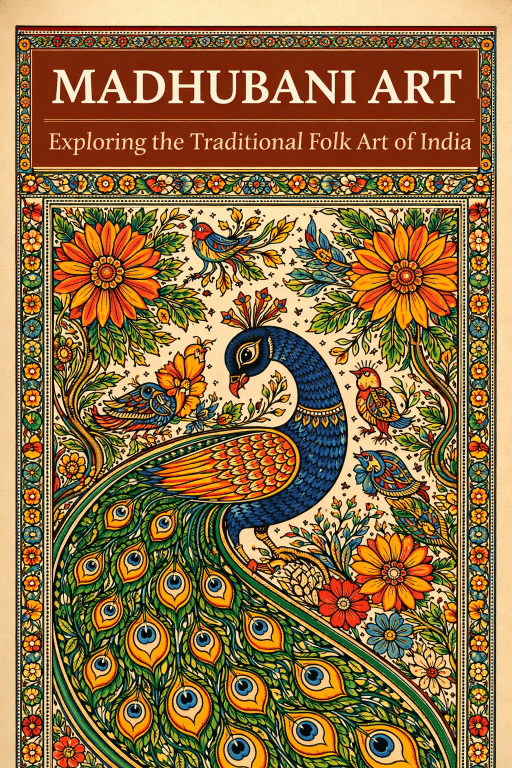
Traditional Madhubani art is instantly recognizable because of its distinctive features:
- Double-lined borders
- No empty spaces (backgrounds filled with patterns)
- Flat perspective
- Nature-inspired themes
- Bold use of natural pigments
One of the defining traits of traditional Madhubani art is the absence of shading. Forms are defined through line and pattern, not gradients.
When evaluating what is Madhubani painting visually, these structural characteristics make it unique.
Common Symbols in Mithila Painting
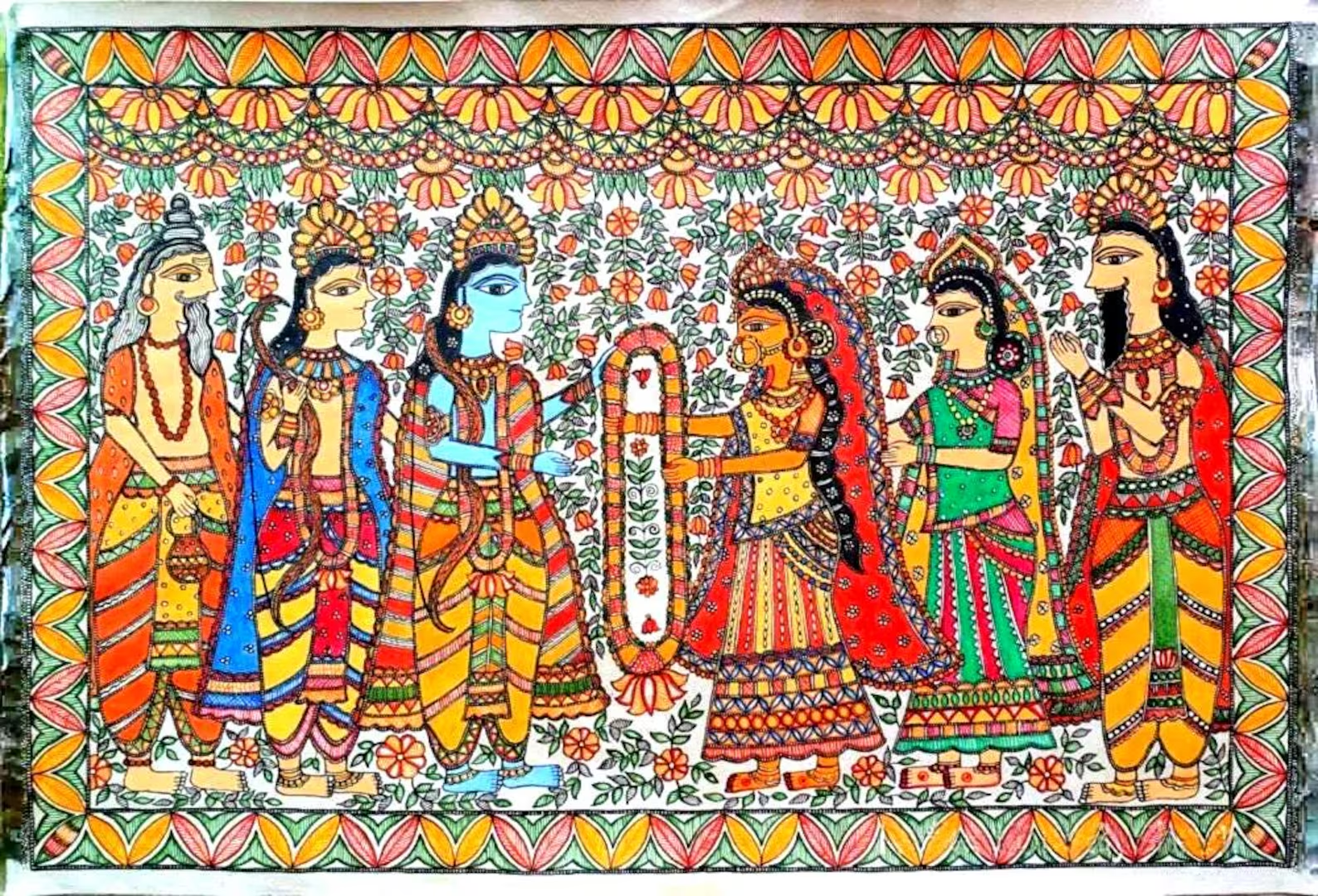
Mithila painting uses symbolic language. Every element carries meaning.
Common motifs include:
- Fish (prosperity and fertility)
- Peacock (love and beauty)
- Sun and Moon (cosmic energy)
- Lotus (divinity and purity)
- Tree of Life (growth and connection)
In Madhubani art, symbolism is not decorative, it is intentional.
Understanding these symbols adds depth when purchasing or creating Madhubani painting.
Materials Used in Traditional Madhubani Painting
Historically, traditional Madhubani art used:
- Natural dyes from flowers and leaves
- Rice paste for white
- Soot for black
- Handmade paper or mud walls
Even today, many artists preserve these techniques to honor Madhubani painting history.
Modern adaptations may use acrylics and canvas, but the structural discipline of Mithila painting remains unchanged.
How to Identify Authentic Madhubani Art
When searching what is Madhubani painting online, you’ll encounter mass-produced prints.
Authentic Madhubani art has:
- Hand-drawn line variation
- Consistent pattern rhythm
- Balanced composition
- Cultural accuracy in motifs
Collectors often prefer commissioning directly from experienced studios to ensure authenticity.
Commission authentic Madhubani art
How to Create Your Own Madhubani Art
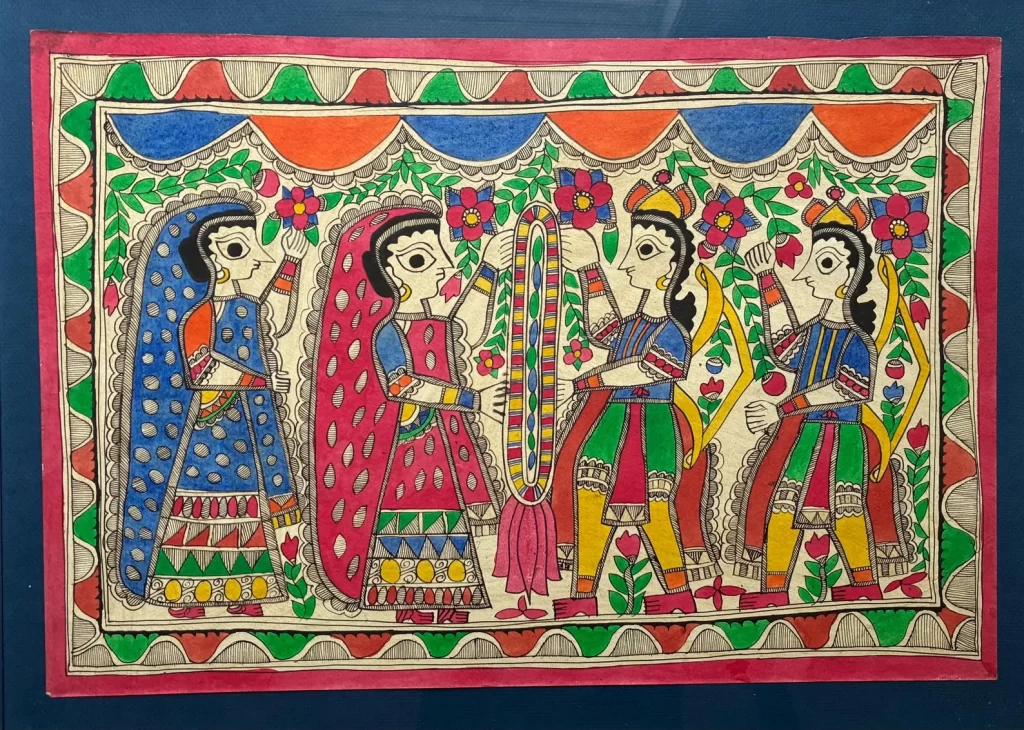
If you’re not just asking what is Madhubani painting but also wondering how to create it, here is a structured overview:
- Choose a central theme (nature, deity, animal, ritual scene)
- Draw a double border frame
- Outline forms using black ink
- Fill empty spaces with repetitive patterns
- Apply flat, vibrant colors
- Avoid shading, use pattern contrast instead
Learning Madhubani art requires patience and repetition. The discipline of filling space without cluttering it takes guided practice.
Random tutorials often miss structural fundamentals. That’s where formal training becomes valuable.
Join professional Madhubani art classes
Modern Madhubani Art: Beyond Tradition
While rooted in the origin of Madhubani painting, the art form has evolved.
Modern Madhubani art appears in:
- Canvas paintings
- Murals
- Textile design
- Home décor panels
- Corporate art commissions
Studios such as Rajni Dutta Art & Design carefully balance traditional Madhubani art techniques with contemporary presentation, ensuring the integrity of Mithila painting while adapting it to modern spaces.
This evolution keeps Madhubani painting relevant without diluting its cultural core.
Where Is Madhubani Art Used Today?
Madhubani art today is widely used in:
- Living room statement pieces
- Temple spaces
- Art exhibitions
- Cultural festivals
- Art education programs
The versatility of Madhubani painting makes it suitable for both personal and professional environments.
Many art enthusiasts who first explore what is Madhubani painting eventually decide either to commission a custom piece or enroll in structured classes.
Madhubani Art Classes by Rajni Dutta Art & Design
For those who want to move beyond appreciation into practice, structured learning matters.
Rajni Dutta Art & Design offers guided Madhubani art classes designed for:
- Beginners
- Hobby artists
- Advanced learners
- Art educators
These classes focus on:
- Madhubani painting history
- Pattern discipline
- Symbol accuracy
- Composition planning
- Traditional Madhubani art techniques
Rather than teaching surface-level copying, the approach builds deep understanding of what is Madhubani painting at its core.
Why Choose Rajni Dutta Art Classes?
Students often choose Rajni Dutta Art & Design because of:
- Structured curriculum
- Cultural authenticity
- Personalized guidance
- Online and in-studio options
- Focus on mastery, not shortcuts
The emphasis is on respecting the origin of Madhubani painting while helping students develop their own artistic voice.
Course Details & Enrollment
Courses typically include:
- Introduction to Madhubani painting history
- Practice of Mithila painting motifs
- Color theory in traditional Madhubani art
- Final project creation
Enroll in Madhubani art classes
Conclusion: The Timeless Beauty of Madhubani Painting
So, what is Madhubani painting truly?
It is history.
It is storytelling.
It is structure and symbolism.
It is discipline and beauty.
From understanding the origin of Madhubani painting to exploring modern adaptations, this art form continues to evolve while staying deeply rooted in tradition.
Whether you choose to collect authentic Madhubani art or learn Mithila painting yourself, the journey begins with curiosity.
And when that curiosity turns into commitment, having the right guidance makes all the difference.
Check us out on Instagram


