
Home » madhubani art classes
Learn the fine line folk art of Mithila through in-studio, online live, or recorded classes. Floral motifs, nature elements, human figures, mythological themes, and complete compositions — one-on-one instruction, all levels welcome.

THE CURRICULUM
A structured, practice-focused programme — every session builds on the last, and every class ends with a finished Madhubani artwork.
PRICING
8 one-on-one sessions of 90 minutes each. Choose the format that works best for you.
WHAT OUR STUDENTS SAY
The studio's Madhubani art classes were a beautiful way to learn the tradition — the instructors explained the bold outlines and natural motifs so patiently that I left my first session with a piece I actually framed.
We organised a Madhubani art workshop for a family get-together and the team made it engaging for everyone, from kids to grandparents — great energy and everyone left with their own finished piece.
The studio's advanced Madhubani course helped me refine my linework and traditional colour palette far more than I expected — thoughtful, personal feedback in a warm and encouraging space. Already looking forward to the next level.
WHY LEARN WITH US
Learn traditional Madhubani motifs, border patterns, nature elements, human figures, and mythological compositions from a practising artist with deep knowledge of the Mithila tradition.
The 8-session curriculum moves from foundational line work and borders through florals, nature motifs, human figures, the Tree of Life, and full mythological compositions.
Attend in-studio at C.R. Park, join interactive online live sessions, or learn through recorded modules at your own pace. The choice is yours.
Understand the mythology, rituals, and symbolism behind Madhubani motifs — from the auspicious lotus and fish to the divine figures and Tree of Life rooted in Mithila tradition.
Madhubani is built on precise, confident line work. These classes develop the hand control and decorative discipline that make this art form so distinctive and admired.
Suitable for complete beginners and experienced folk art practitioners alike. One-on-one format ensures instruction is always tailored to your current level and pace.
Madhubani Art



THE ARTIST BEHIND Rajni Dutta Art & Design
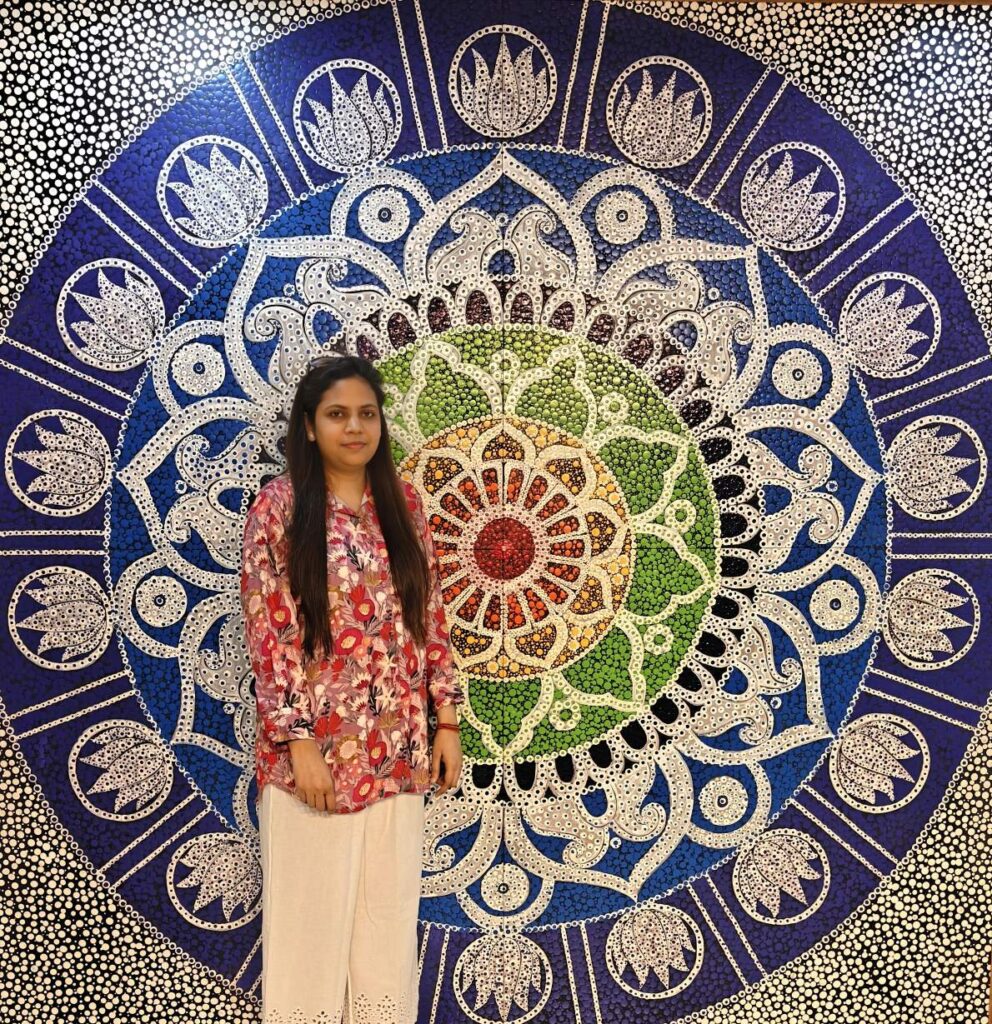
Rajni Dutta · Founder
Rajni Dutta is a contemporary artist, designer, and the creative force behind Rajni Dutta Art, a South Delhi – based art and design studio known for its unique fusion of tradition and modernity. With a deep-rooted passion for India’s cultural and artistic heritage, Rajni specializes in folk art fusion, reinterpreting classical art forms such as Mandala, Gond, Warli, Madhubani, Pattachitra, Kalamkari, Pichwai, and Lippan through a contemporary perspective.



FREQUENTLY ASKED
Everything you need to know before enrolling. Still have a question?
No. The class is suitable for complete beginners with no prior art background.
Yes, all materials — including clay, mirrors, base board, and adhesives — are included for in-studio sessions. For online live classes, materials can be self-arranged or a kit can be couriered for ₹2,000.
Classes are one-on-one and scheduled at a time that suits you. Confirm your preferred slot via WhatsApp.
Border patterns, lotus and floral motifs, fish and nature elements, human figures, Tree of Life, mythological themes, and a complete final Madhubani composition — across 8 sessions.
Yes. An unlimited pausing facility is available for both in-studio and online live formats.
Yes, a recorded self-paced course is launching soon at ₹600 per artwork. Message us on WhatsApp for early access.
Madhubani is probably the Indian folk art you've seen most often without knowing its name — dense, intricate line work, bold double-outlined figures, and barely an inch of blank space left unfilled. Learning it properly is less about drawing talent and more about patience with pattern. This page covers what a Madhubani art class actually teaches, who it suits, the schedule, materials, cost, and how to enrol across Delhi NCR.
Madhubani, also called Mithila painting, is a folk art tradition from the Mithila region of Bihar, characterised by bold double-line outlines filled entirely with intricate geometric and natural patterns, leaving almost no blank space. Traditional subjects include Hindu deities, nature motifs like fish, peacocks, and the sun, and scenes from festivals and weddings, historically painted using natural pigments on freshly plastered mud walls.
What distinguishes it technically from other Indian folk forms is the double-line outline — every shape is drawn with two parallel lines rather than one, and the space between them is often filled with fine cross-hatching or small repeating motifs. That single technical habit is what gives Madhubani its dense, almost woven texture, and it's the first thing a class properly teaches, since getting it wrong makes everything after it look off.
A class starts with the double-line outline technique and basic fill patterns before moving to a full composition. You'll learn to plan a subject, draw it with the characteristic bold outline, and fill both the outline and the surrounding space so nothing is left empty — the "horror of empty space" that defines the style.
A typical first session covers, step by step:
Madhubani's pattern-based technique works for a wide range of starting points.
No prior art experience is assumed. Because the technique relies on repeating patterns rather than freehand realism, beginners often progress faster here than they expect — consistency matters more than natural drawing ability.
If you already paint or draw, Madhubani's double-line discipline sharpens control in a way that transfers to other work. Sessions can move quickly into more complex compositions and denser pattern fill for anyone with existing technique.
Simple animal or nature motifs keep a first session achievable for children, and the repetitive pattern-filling is genuinely enjoyable for younger learners who like detail-oriented tasks. Parent-child bookings let both work on the same subject at their own pace.
There's more than one way to learn:
| Format | Best for | Good to know |
|---|---|---|
| In-studio | Hands-on learners wanting direct guidance | Materials set up; ~2–3 hrs per session |
| Online — live | Learners outside Delhi or short on time | Real-time feedback; simple material list shared ahead |
| Online — recorded | Self-paced learners | Rewatch pattern demonstrations as needed |
| Kids & parent-child | Younger learners | Simplified motifs, same core technique |
A single introductory session runs about two to three hours, enough to finish a small motif without rushing the pattern fill, which is where the technique actually shows. A short series helps the double-line control and pattern consistency settle in properly.
For in-studio classes, everything's provided:
For online classes, you get a short materials list in advance — fine-tip pens and basic paper are inexpensive and easy to find, so there's little barrier to starting from home.
Price depends on format and commitment rather than a single flat rate. What shapes it:
A short series rather than a single session is where the double-line control and pattern work genuinely improve, since consistency takes a bit of repetition to settle into. Tell us your level and preferred format, and you'll get clear pricing before enrolling.
The studio is in C.R. Park, South Delhi, easily reached from South Delhi, Greater Kailash, Nehru Place, and the wider Delhi NCR area. If you've searched for Madhubani art classes near you in the capital region, this is a genuine in-person, guided option teaching the authentic technique rather than a simplified craft-kit version.
Too far for a studio visit? The live online class delivers the same guided teaching from home, and the recorded course removes the travel question entirely.
Getting started takes a couple of minutes:
Classes are led by folk-art fusion artist Rajni Dutta and her full-time team of practising commission artists, teaching under her direct mentorship. Madhubani sits alongside Warli, Lippan, Gond, Kalamkari, and mandala in the studio's practice, each taught as its own discipline with its own technical habits, not folded into a generic "Indian folk art" class.
For a sense of the credibility behind the teaching: the studio has been featured by Hindustan Times, Business Standard, ThePrint, and ANI, and has run creative sessions for organisations including Airbnb, Qualcomm, upGrad, and Shoppers Stop. There's more about Rajni and the studio if you'd like the fuller background.
If Madhubani turns out to be one folk form among several you'd like to explore, our Lippan art classes and Gond art classes cover two other distinct traditions taught at the same studio.
Madhubani, or Mithila painting, is a folk art tradition from the Mithila region of Bihar. It's known for bold double-line outlines filled entirely with intricate pattern, historically depicting Hindu deities, nature motifs, and festival scenes on mud walls.
No. Madhubani relies on repeating patterns rather than freehand realism, which means consistency and patience matter more than natural drawing ability. Most beginners progress quickly once the core technique clicks.
A complete small piece using a traditional motif — a fish, peacock, tree of life, or similar subject — built with the double-line outline and pattern fill technique, finished with colour in the traditional palette.
Both. You can learn hands-on at the C.R. Park studio, join a live online class, or follow recorded lessons at your own pace. Kids and parent-child sessions are also available with simplified motifs.
Yes for in-studio classes — paper or canvas, pens, brushes, and paints are all provided. Online students get a short, affordable materials list in advance.