
Home » rangoli art classes
Learn traditional and contemporary Rangoli art through in-studio, online live, or recorded classes. Dot-grid layouts, freehand designs, colour blending, and festive compositions — one-on-one instruction, all levels welcome.
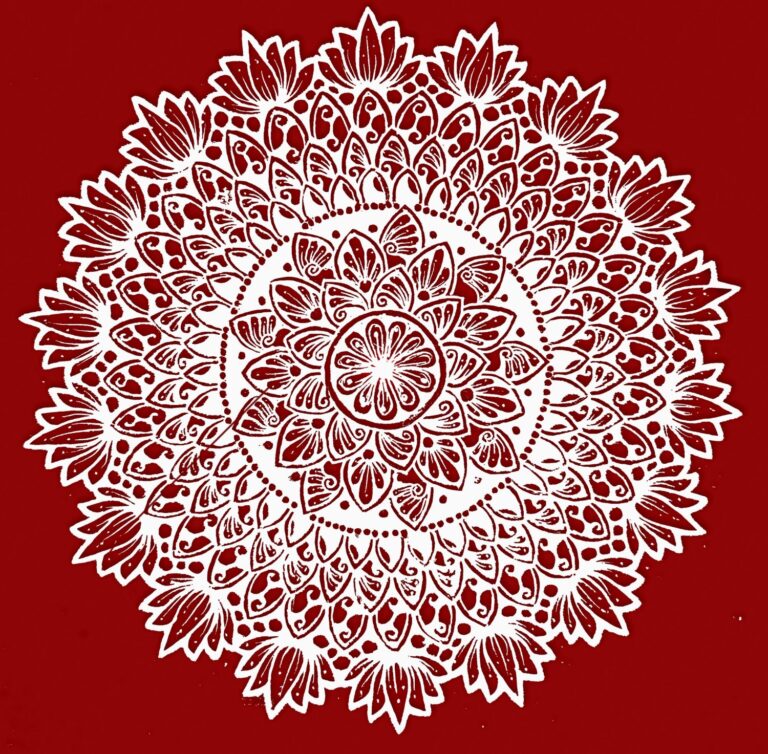
THE CURRICULUM
A structured, practice-focused programme — every session builds on the last, and every class ends with a finished Rangoli composition.
PRICING
8 one-on-one sessions of 90 minutes each. Choose the format that works best for you.
WHAT OUR STUDENTS SAY
The studio's rangoli art classes were such a joyful way to learn the craft — the instructors explained the powder techniques and pattern symmetry so patiently that I left my first session with a design I was genuinely proud of.
We organised a rangoli art workshop ahead of Diwali for our society residents and the team made it fun and accessible for everyone, from kids to grandparents — great energy and everyone left with their own design.
The studio's advanced rangoli course helped me refine my freehand technique and colour blending far more than I expected — thoughtful, personal feedback in a warm and encouraging space. Already looking forward to the next batch.
WHY LEARN WITH US
From dot-grid foundations to elaborate festive compositions — here’s what makes these classes different.
Learn traditional and contemporary Rangoli techniques including dot grids, freehand drawing, geometric construction, and colour blending from a practising artist.
The 8-session curriculum moves logically from simple geometric designs to elaborate festive and fusion Rangoli compositions, building skill with every class.
Attend in-studio at C.R. Park, join interactive online live sessions, or learn through recorded modules at your own pace. The choice is yours.
Understand the symbolism, rituals, and auspicious meanings behind Rangoli motifs. Every pattern you create carries cultural depth, not just decorative beauty.
Each 90-minute class is highly practical. You complete a full Rangoli design every session, building confidence through consistent finished work.
Suitable for complete beginners and advanced decorative artists alike. One-on-one format ensures instruction is always tailored to your current level.



Rangoli Art
THE ARTIST BEHIND Rajni Dutta Art & Design
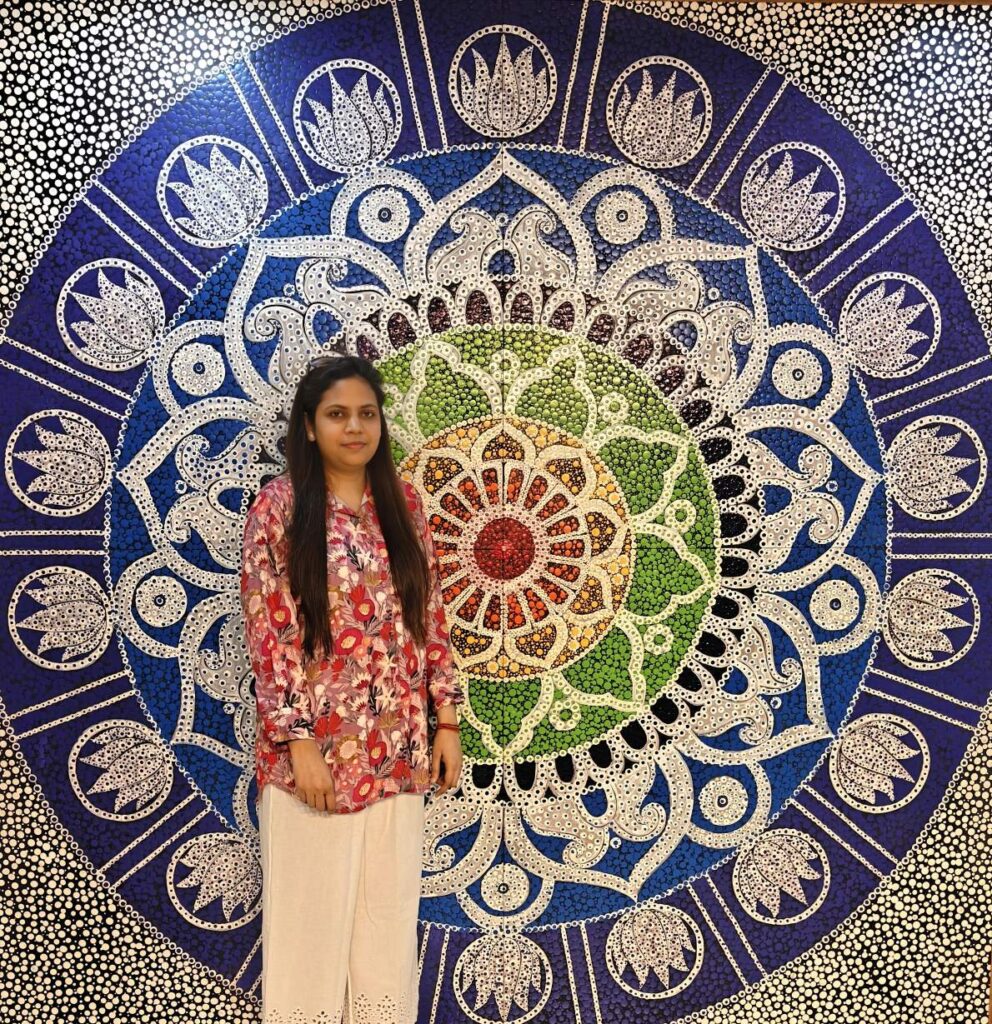
Rajni Dutta · Founder
Rajni Dutta is a contemporary artist, designer, and the creative force behind Rajni Dutta Art, a South Delhi – based art and design studio known for its unique fusion of tradition and modernity. With a deep-rooted passion for India’s cultural and artistic heritage, Rajni specializes in folk art fusion, reinterpreting classical art forms such as Mandala, Gond, Warli, Madhubani, Pattachitra, Kalamkari, Pichwai, and Lippan through a contemporary perspective.



FREQUENTLY ASKED
Everything you need to know before enrolling. Still have a question?
No. The class is suitable for complete beginners with no prior art background.
Yes, all materials — including clay, mirrors, base board, and adhesives — are included for in-studio sessions. For online live classes, materials can be self-arranged or a kit can be couriered for ₹2,000.
Classes are one-on-one and scheduled at a time that suits you. Confirm your preferred slot via WhatsApp.
Dot-grid, freehand, geometric, floral, radial, traditional festive, and contemporary fusion Rangoli styles — across 8 sessions.
Yes. An unlimited pausing facility is available for both in-studio and online live formats.
Yes, a recorded self-paced course is launching soon at ₹600 per artwork. Message us on WhatsApp for early access.
You've drawn a rangoli on your doorstep every Diwali and it's never quite looked like the ones you see online. There's a reason — proper rangoli is built on a hidden grid most people skip, and the freehand versions that look effortless are actually the harder skill, not the easier one. This page covers what a rangoli art class actually teaches, the different styles, who it suits, the schedule, materials, cost, and how to enrol across Delhi NCR.
Rangoli is a traditional Indian decorative art form made by arranging coloured powder, rice flour, sand, or flower petals into patterns, most commonly on the floor at doorways during festivals like Diwali. Designs range from geometric patterns built on a dot grid to freeform floral and figurative compositions. In its original form it's temporary, swept away after the celebration; classes typically teach the same design skills applied to a lasting, take-home piece instead.
That last point is worth being upfront about. A genuine floor rangoli is functional and short-lived by tradition — nobody expects it to survive past the festival. A class can't hand you a doorstep, so the same design principles are taught and applied to a board, canvas, or "permanent rangoli" medium you can actually keep, using paint or adhesive materials that mimic the traditional powder look without the impermanence.
A class starts with the dot-grid method, since it's the foundation most traditional rangoli patterns are built on, before moving into filling and colour technique. You'll finish with a complete rangoli-style piece on a permanent surface, ready to display rather than sweep away.
A typical first session covers, step by step:
Most people assume freehand rangoli is the beginner-friendly version, since it looks looser and more casual. It's usually the opposite. Dot-grid patterns are actually easier to learn first, because the grid does most of the compositional work for you — get the dots right and the symmetry follows almost automatically.
Freehand rangoli, without a grid to guide it, asks you to judge proportion and balance entirely by eye, which is a harder skill built on top of the grid-based foundation, not a substitute for it. Classes teach the grid method first for exactly this reason.
Rangoli's structured, grid-based method suits a wide range of learners.
No prior art experience is assumed. The dot-grid method means most beginners produce a genuinely symmetrical, satisfying piece on their first attempt, which is rare for a first class in any medium.
If Diwali or another festival is the motivation, classes ahead of the season help you go into it with real technique rather than repeating the same rough doorstep design every year.
Simplified grids and fewer colours keep a first rangoli achievable for children, and the colourful, hands-on nature of the work holds younger attention well. Parent-child bookings let both work on the same design at their own pace.
There's more than one way to learn:
| Format | Best for | Good to know |
|---|---|---|
| In-studio | Hands-on learners wanting direct guidance | Materials set up; ~2 hrs per session |
| Online — live | Learners outside Delhi or short on time | Real-time feedback; simple material list shared ahead |
| Online — recorded | Self-paced learners | Rewatch grid and filling steps as needed |
| Kids & parent-child | Younger learners | Simplified grids, same core method |
A single introductory session runs about two hours, enough to plot, fill, and finish a complete small design without rushing the colour work. A short series before a festival helps build toward a more ambitious, freehand-style piece.
For in-studio classes, everything's provided:
For online classes, you get a short materials list in advance — basic paper, a ruler, and colours are inexpensive and easy to source, so there's little barrier to starting from home.
Price depends on format and commitment rather than a single flat rate. What shapes it:
A short series ahead of a festival is where the freehand skill genuinely builds, since it's a harder technique layered on top of the grid method. Tell us your level and preferred format, and you'll get clear pricing before enrolling.
The studio is in C.R. Park, South Delhi, easily reached from South Delhi, Greater Kailash, Nehru Place, and the wider Delhi NCR area. If you've searched for rangoli art classes near you in the capital region, this is a genuine in-person, guided option teaching the proper technique rather than a quick festival demo.
Too far for a studio visit? The live online class delivers the same guided teaching from home, and the recorded course removes the travel question entirely.
Getting started takes a couple of minutes:
Classes are led by folk-art fusion artist Rajni Dutta and her full-time team of practising commission artists, teaching under her direct mentorship. Rangoli sits alongside mandala, Madhubani, Gond, and several other traditions in the studio's practice, each taught as its own discipline rather than folded into a generic pattern-drawing session.
For a sense of the credibility behind the teaching: the studio has been featured by Hindustan Times, Business Standard, ThePrint, and ANI, and has run creative sessions for organisations including Airbnb, Qualcomm, upGrad, and Shoppers Stop. There's more about Rajni and the studio if you'd like the fuller background.
If you'd rather have a rangoli made for a specific event than learn it yourself, custom mandala commissions cover a similarly grid-based, symmetrical art form available to order instead.
Grid-based rangoli uses a dot grid to guide the pattern, making symmetry easier to achieve, especially for beginners. Freehand rangoli skips the grid and relies on judging proportion by eye, which is actually the harder skill, taught after the grid method is comfortable.
Classes teach the same design and colour techniques used in traditional floor rangoli, applied to a lasting piece on board or canvas that you take home, since a temporary floor design isn't practical as a class outcome.
No. The dot-grid method means most beginners produce a genuinely symmetrical piece on their first attempt, which is unusual for a first class in any art form.
Both. You can learn hands-on at the C.R. Park studio, join a live online class, or follow recorded lessons at your own pace. Kids and parent-child sessions are also available with simplified grids.
Yes for in-studio classes — a board or canvas base, grid tools, and colours are all provided. Online students get a short, affordable materials list in advance.