
Home » kalamkari art classes
Learn India’s heritage pen art through in-studio, online live, or recorded classes. Floral vines, peacock compositions, mythological characters, and complete storytelling artworks — one-on-one instruction, all levels welcome.
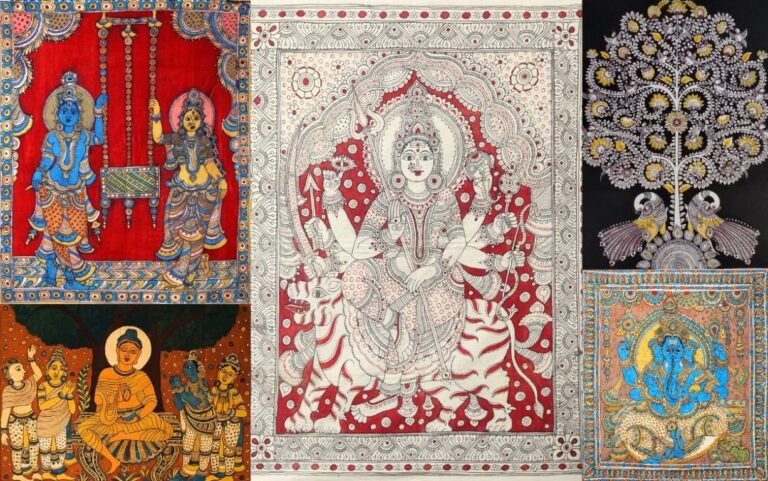
THE CURRICULUM
A structured, practice-focused programme — every session builds on the last, and every class ends with a finished Kalamkari artwork.
PRICING
8 one-on-one sessions of 90 minutes each. Choose the format that works best for you.
The studio's Kalamkari art classes were a wonderful deep-dive into the craft — the instructors explained the natural dyes and pen-work technique so clearly that even as a first-timer I finished the session with a piece I was proud of.
We booked a Kalamkari art workshop for a small group of friends and the team made it fun and accessible for everyone — patient instruction and each of us left with our own hand-painted fabric piece.
The studio's advanced Kalamkari course pushed my technique and understanding of the motifs much further than I expected — detailed feedback and a genuinely encouraging space to learn in. Already planning to join the next batch.
WHY LEARN WITH US
From border patterns to complete mythological compositions — here’s what makes these classes different.
Learn traditional Kalamkari motifs, border patterns, floral vines, peacock compositions, and mythological storytelling techniques from a practising heritage art specialist.
The 8-session curriculum progresses logically from basic borders and nature motifs to complex character drawing and full narrative compositions, building skill with every class.
Attend in-studio at C.R. Park, join interactive online live sessions, or learn through recorded modules at your own pace. The choice is yours.
Understand the heritage, mythology, and symbolism behind Kalamkari elements — every motif you draw carries the weight of India's ancient temple and textile traditions.
Kalamkari builds exceptional line control, decorative balance, and patience. These skills strengthen your broader artistic practice well beyond the course itself.
Suitable for first-time folk art learners and experienced artists alike. One-on-one format ensures instruction is always tailored to your current level and pace.
Kalamkari Art



THE ARTIST BEHIND Rajni Dutta Art & Design
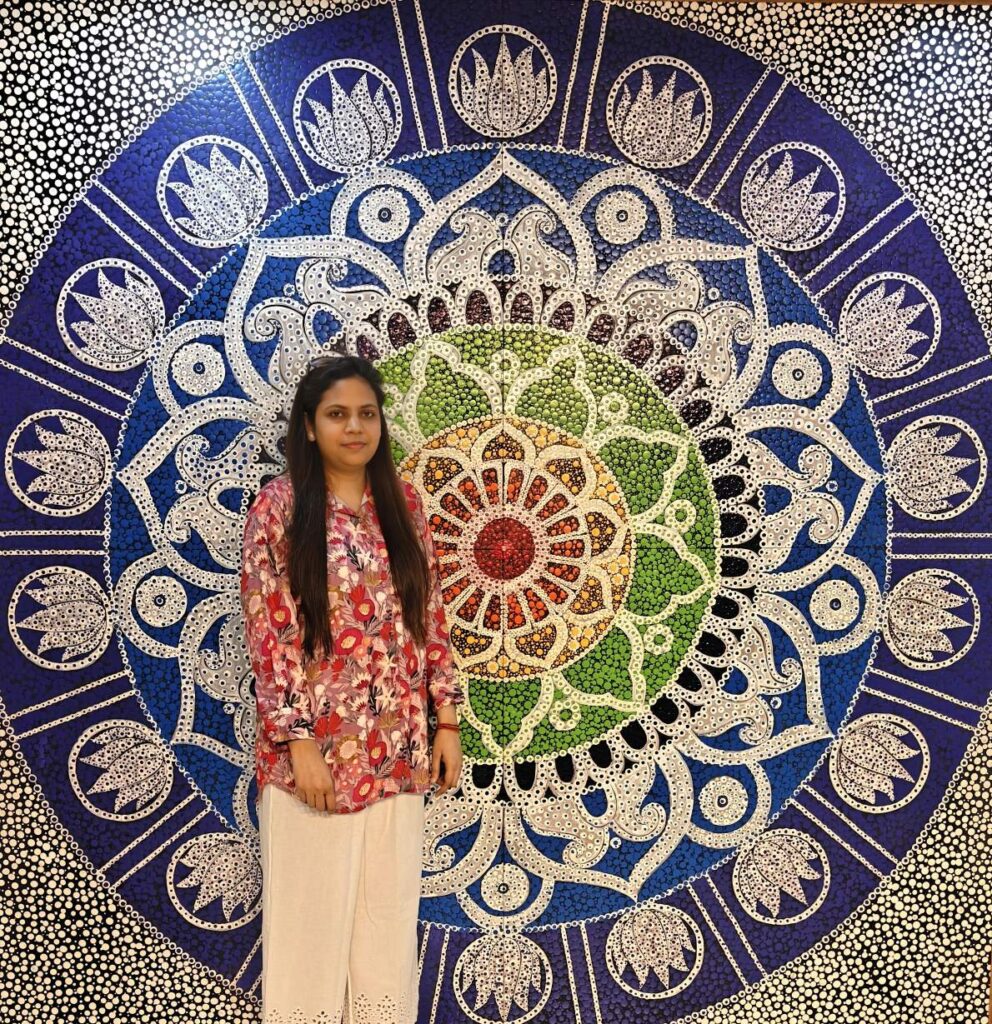
Rajni Dutta · Founder
Rajni Dutta is a contemporary artist, designer, and the creative force behind Rajni Dutta Art, a South Delhi – based art and design studio known for its unique fusion of tradition and modernity. With a deep-rooted passion for India’s cultural and artistic heritage, Rajni specializes in folk art fusion, reinterpreting classical art forms such as Mandala, Gond, Warli, Madhubani, Pattachitra, Kalamkari, Pichwai, and Lippan through a contemporary perspective.



FREQUENTLY ASKED
Everything you need to know before enrolling. Still have a question?
No. The class is suitable for complete beginners and experienced artists alike.
Yes, all materials — including clay, mirrors, base board, and adhesives — are included for in-studio sessions. For online live classes, materials can be self-arranged or a kit can be couriered for ₹2,000.
Classes are one-on-one and scheduled at a time that suits you. Confirm your preferred slot via WhatsApp.
Border patterns, floral vines, peacock compositions, mythological character drawing, and complete storytelling compositions — across 8 sessions.
Yes. An unlimited pausing facility is available for both in-studio and online live formats.
Yes, a recorded self-paced course is launching soon at ₹600 per artwork. Message us on WhatsApp for early access.
Kalamkari means "pen work," and once you've watched someone draw a fine, continuous line with a bamboo-tipped pen dipped in dye, the name makes complete sense. It's one of India's oldest textile art forms, and the line control it demands is unlike anything you'll pick up from a brush. This page covers what a Kalamkari class actually teaches, who it suits, the schedule, materials, cost, and how to enrol across Delhi NCR.
Kalamkari is a hand-painted textile art tradition from Andhra Pradesh, traditionally created with a bamboo or date-palm pen dipped in natural dye, used to draw fine outlines that are then filled with colour derived from plant and mineral sources. Two regional styles exist: Srikalahasti, known for detailed mythological scenes drawn freehand, and Machilipatnam, which combines hand-drawing with block-printed outlines. Motifs typically include gods, mythological narratives, florals, and paisley patterns.
The traditional process is genuinely slow — cloth is treated with a mordant, dyed in stages, and often boiled and washed multiple times to fix natural colour permanently into the fibre. That full process takes days, not hours, which is worth knowing upfront: a class teaches the pen-and-line drawing technique and traditional motifs properly, using paints and dyes suited to a single session, rather than compressing the entire multi-day textile-dyeing process into one sitting.
A class starts with pen control — the specific grip and pressure that produces Kalamkari's characteristic fine, continuous line — before moving on to a full motif. You'll learn to plan a design, draw the outline with intent rather than sketchiness, and fill it using colour techniques inspired by the tradition's natural palette.
A typical first session covers, step by step:
Kalamkari's line-work discipline suits a range of learners, though the experience differs slightly by group.
No prior art experience is assumed. Pen control is a skill built through repetition rather than natural talent, so most first-timers see real improvement within a single session. Patience matters more here than raw drawing ability.
If you've already learned Madhubani or another line-based folk style, Kalamkari's pen technique is a genuinely different discipline — finer, more continuous, and closer to calligraphy than to typical brushwork. It's a natural next form to add to an existing folk-art practice.
Simple floral or paisley motifs keep a first session achievable for younger learners, and the steady, focused nature of pen work suits children who enjoy detail-oriented tasks. Parent-child bookings let both work at their own pace on the same design.
There's more than one way to learn:
| Format | Best for | Good to know |
|---|---|---|
| In-studio | Hands-on learners wanting direct guidance | Materials set up; ~2–3 hrs per session |
| Online — live | Learners outside Delhi or short on time | Real-time feedback; simple material list shared ahead |
| Online — recorded | Self-paced learners | Rewatch pen-technique demonstrations as needed |
| Kids & parent-child | Younger learners | Simplified motifs, same core pen technique |
A single introductory session runs about two to three hours, enough to finish a small motif without rushing the line work, which is where the technique genuinely lives. A short series helps pen control settle in properly, since it's a skill that improves with repetition more than any other single factor.
For in-studio classes, everything's provided:
For online classes, you get a short materials list in advance — fine-tip pens and basic paper or fabric are inexpensive and easy to find, so there's little barrier to starting from home.
Price depends on format and commitment rather than a single flat rate. What shapes it:
A short series rather than a single session is where pen control genuinely improves, since the steadiness the line work demands takes repetition to settle into. Tell us your level and preferred format, and you'll get clear pricing before enrolling.
The studio is in C.R. Park, South Delhi, easily reached from South Delhi, Greater Kailash, Nehru Place, and the wider Delhi NCR area. Kalamkari is genuinely uncommon to find taught hands-on outside its home region, so if you've been searching without much luck, this is a real, in-person option.
Too far for a studio visit? The live online class delivers the same guided teaching from home, and the recorded course removes the travel question entirely.
Getting started takes a couple of minutes:
Classes are led by folk-art fusion artist Rajni Dutta and her full-time team of practising commission artists, teaching under her direct mentorship. Kalamkari sits alongside Madhubani, Warli, Lippan, Gond, and mandala in the studio's practice, each taught as its own tradition rather than folded into a generic folk-art curriculum.
For a sense of the credibility behind the teaching: the studio has been featured by Hindustan Times, Business Standard, ThePrint, and ANI, and has run creative sessions for organisations including Airbnb, Qualcomm, upGrad, and Shoppers Stop. There's more about Rajni and the studio if you'd like the fuller background.
If Kalamkari turns out to be one folk form among several you'd like to explore, our Madhubani art classes and Gond art classes cover two other distinct traditions taught at the same studio.
Kalamkari is a hand-painted textile art tradition from Andhra Pradesh, created with a fine pen and natural dyes, traditionally depicting mythological scenes, florals, and paisley motifs. The name means "pen work."
Classes teach the traditional pen-and-line drawing technique and motifs properly. The full mordant-and-dye process on fabric takes several days and isn't something a single session can replicate, so classes use colours and materials suited to finishing a piece in the time available.
No. Pen control is a skill built through repetition rather than natural drawing talent, so most first-timers see real improvement within one session.
Both. You can learn hands-on at the C.R. Park studio, join a live online class, or follow recorded lessons at your own pace. Kids and parent-child sessions are also available with simplified motifs.
Yes for in-studio classes — pens, paper or fabric, and colours are all provided. Online students get a short, affordable materials list in advance.
Join Rajni Dutta’s Kalamkari art classes in Delhi NCR. In-studio or online — all levels welcome.