
Gond art is one of India’s most recognizable and storytelling-driven folk art forms. If you’ve ever wondered how to make Gond art, you’re not alone. Artists, hobbyists, parents, and even interior designers are increasingly drawn to its rhythmic patterns, symbolic animals, and narrative depth.
This guide is designed to be a go-to resource for anyone who wants to learn Gond painting from scratch. Whether you are exploring beginner easy Gond art, introducing Gond art for kids, or simply trying your hand at easy Gond art styles, this article will walk you through the process in a clear, practical, and culturally respectful way.
Understanding Gond Folk Art Before You Pick Up a Pencil
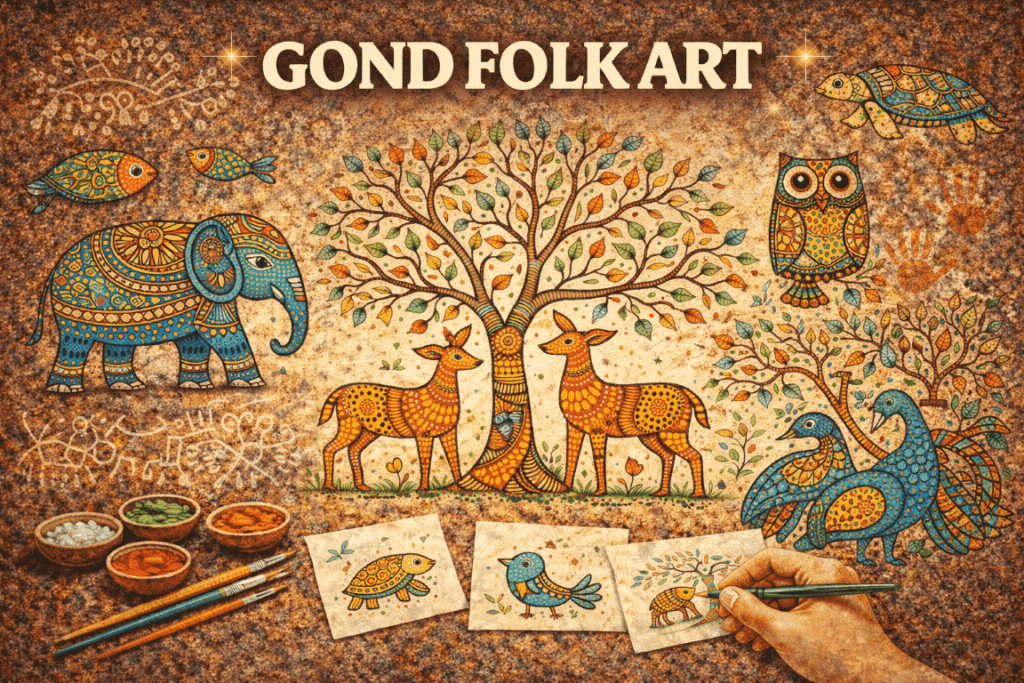
Gond folk art comes from the Gond tribes of central India and is most closely associated with Gond art of Madhya Pradesh. Traditionally, these paintings were created on mud walls to celebrate festivals, nature, and daily life. They were not decorative fillers; they were visual stories.
This is why Gond art drawing looks different from realistic or academic art. Instead of shading and perspective, Gond art relies on bold outlines, flat colours, and rhythmic patterns that fill every form.
When beginners struggle with Gond art, it’s usually because they try to draw it like a regular sketch instead of letting the patterns do the storytelling.
What Makes Gond Art Visually Unique?
To truly learn how to make Gond art, you need to observe its defining characteristics:
- Repetitive line patterns that fill every shape
- Use of dots, dashes, fish-scale textures, and waves
- Central figures like animals, trees, birds, and deities
- A sense of movement, even in still subjects
Modern Gond art drawing still follows these principles, even when created on paper or canvas.
What Makes Gond Art Easy for Beginners?
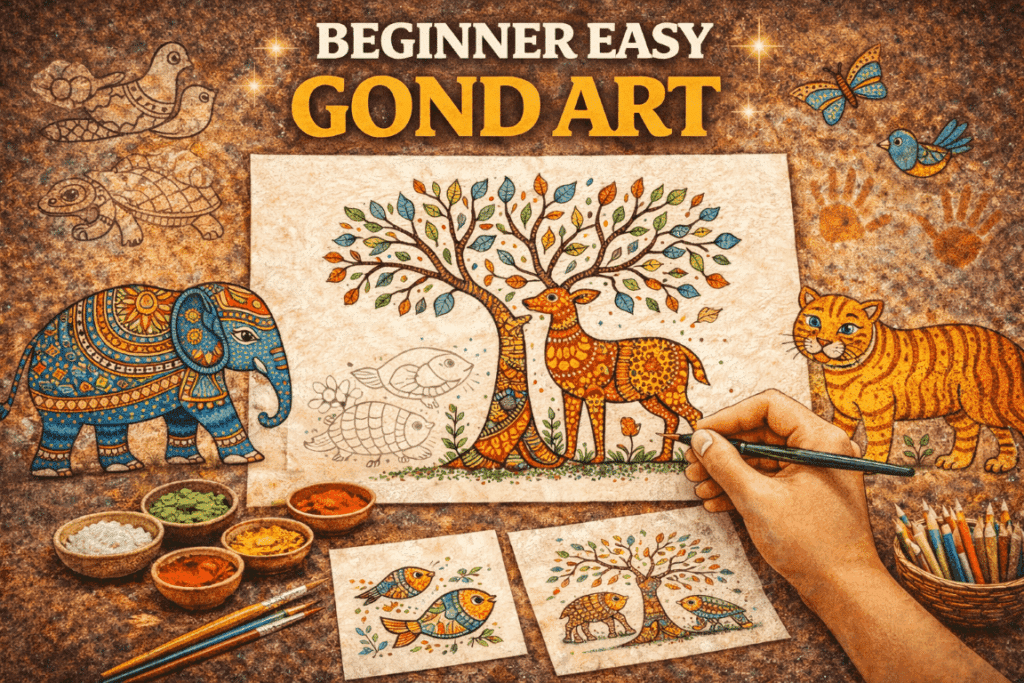
One reason beginner easy Gond art works so well is that perfection is not the goal. Gond art is expressive, repetitive, and forgiving. You don’t need advanced anatomy skills or perfect proportions.
Easy Gond art focuses on:
- Clear shapes
- Repeating patterns
- Flow rather than accuracy
This is also why Gond art for kids is so effective, children naturally enjoy repetition and storytelling.
Materials You Need to Start Gond Art Drawing
Before learning how to make Gond art, it helps to keep materials simple. You do not need professional supplies.
For beginners, this is more than enough:
- Plain paper or cartridge sheet
- Pencil and eraser
- Black fine liner pen
- Poster colours or acrylic paints
- Brushes (round size 0, 1, 2)
As skills improve, many artists move to canvas or handmade paper, especially when working on Gond folk art pieces meant for display.
How to Make Gond Art Step by Step?
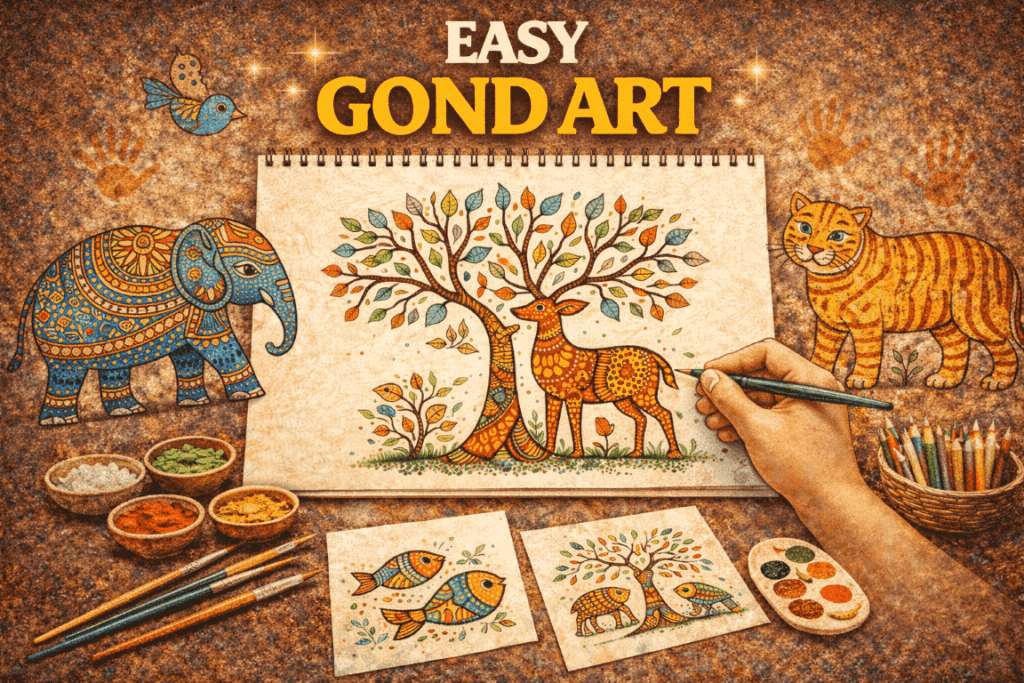
This is where bullets actually help, because clarity matters.
Here’s a simple and effective process that works for beginners:
Step 1- Start with a simple subject
For beginners, start with:
- A fish
- A bird
- A tree
- A deer or peacock
These subjects are common in Gond folk art and are easy to stylise.
This is especially effective when teaching Gond art for kids.
Step 2- Draw the Basic Outline
Using a pencil, lightly sketch the outer shape. Don’t add details yet.
Use a black pen to trace the final outline. This strong boundary is essential in Gond art drawing.
At this stage, gond art drawing is about form, not decoration. Keep the lines smooth and organic.
Step 3- Fill the Shape with Patterns
This is where easy Gond art becomes meditative.
Inside the outline, fill the space using:
- Dots
- Short lines
- Curves
- Repeated textures
No two sections should look exactly the same. This variation is a signature of Gond folk art. Avoid leaving empty spaces.
Step 4- Add Colour Thoughtfully
Traditional Gond art of Madhya Pradesh used natural pigments. Today, you can use bright acrylics or poster colours.
Tips:
- Use 3–5 colours only
- Keep contrast high
- Avoid shading like realism
Use flat, bold colours. Traditional Gond art of Madhya Pradesh used natural pigments, but modern artists use poster or acrylic colours while maintaining the flat style.
This makes the art visually strong and beginner-friendly.
Step 5- Let the story emerge
Patterns should follow the shape, not fight it. This is where Gond art becomes expressive rather than mechanical.
Common Mistakes Beginners Make
Even easy Gond art can feel difficult if beginners rush. Some common mistakes include:
- Overcrowding patterns without rhythm
- Using shading instead of flat colour
- Trying to copy advanced compositions too early
- Ignoring the cultural context of Gond folk art
Slowing down and practicing simple forms fixes most of these issues.
Beginner Easy Gond Art Ideas to Practice
If you’re practicing regularly, stick to subjects that allow repetition without complexity:
- A single bird with patterned wings
- Fish swimming in circular movement
- Trees filled with leaf-based patterns
- Simple animal silhouettes
These themes are ideal for both beginner easy Gond art and Gond art for kids.
How Long Does It Take to Learn Gond Art?
For most beginners:
- 1–2 weeks to grasp patterns
- 1 month to develop flow
- 3 months to build confidence
Whether you’re exploring easy Gond art casually or pursuing Gond folk art seriously, consistency matters more than speed.
Gond Art for Kids: Why It Works So Well?
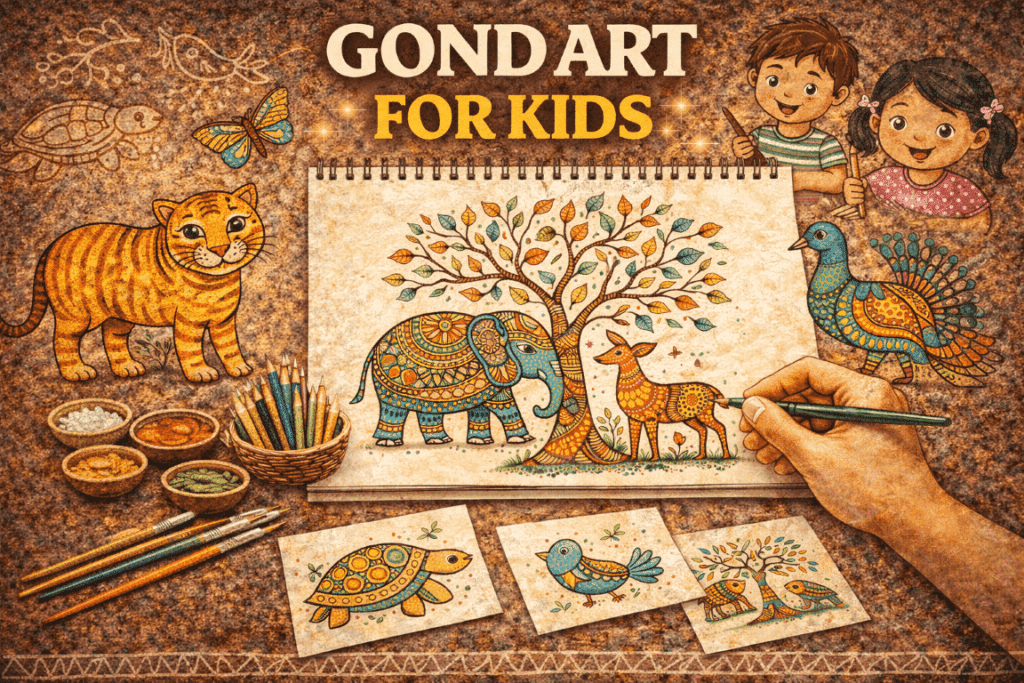
Gond art for kids works best when taught through stories. Each animal or tree becomes a character rather than just a drawing. This approach keeps children engaged and helps them understand Gond folk art as more than decoration.
Gond art for kids should focus on:
- Simple shapes
- Fewer patterns
- Storytelling through drawing
Parents often notice that Gond art drawing improves focus, patience, and creativity, all while introducing children to Indian cultural heritage.
Learning Gond Art Beyond DIY Practice
Many learners reach a stage where they want structure, feedback, and cultural grounding. This is where guided learning helps.
Studios such as Rajni Dutta Art & Design focus on teaching Gond folk art with respect for tradition while making it accessible to modern learners. This balance helps beginners move from casual practice to confident creation.
Learn Gond art with guided instruction
From Learning to Creating Custom Gond Art
As confidence grows, many artists explore custom projects. Gond art adapts beautifully to murals, panels, and commissioned artwork because of its storytelling nature.
Understanding how to make Gond art properly allows artists to scale their work without losing authenticity.
Explore custom Gond art commissions
Gond Folk Art in Modern Times
While rooted in tradition, Gond folk art has evolved beautifully.
Today, you’ll see:
- Modern colour palettes
- Large canvas works
- Gond art murals
- Custom interior installations
Studios like Rajni Dutta Art & Design work closely with traditional techniques while adapting Gond art for contemporary homes and workspaces.
This balance between tradition and relevance keeps the art form alive.
Why Gond Art of Madhya Pradesh Still Defines the Style?
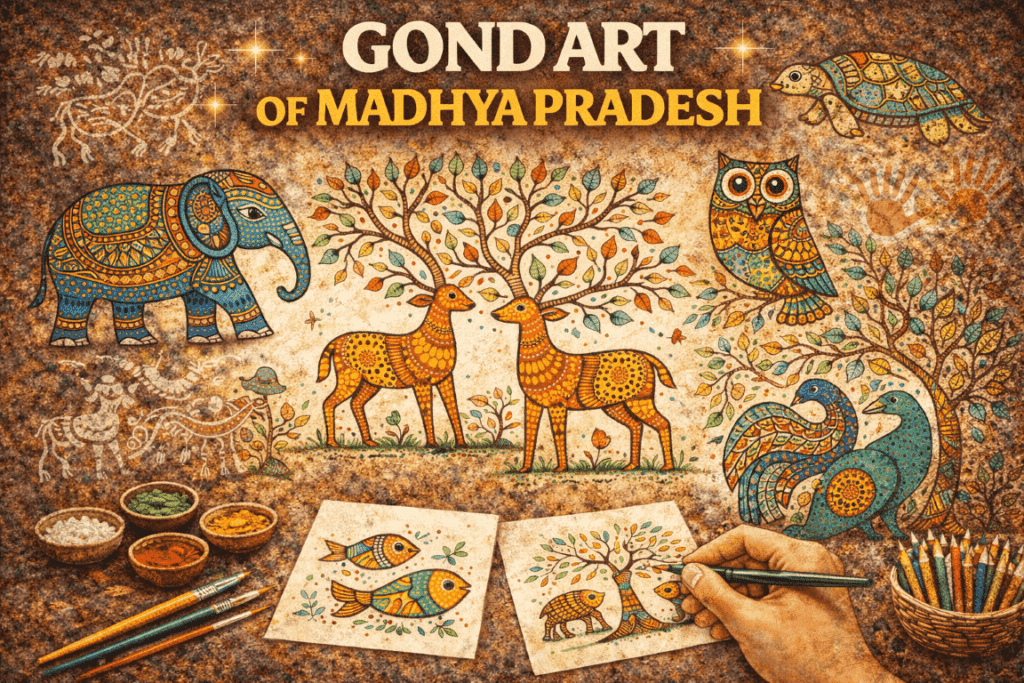
Even as Gond folk art evolves, its roots remain important. Gond art of Madhya Pradesh continues to define the symbols, themes, and visual rhythm that make this art form recognisable worldwide.
Learning Gond art with this awareness ensures that creativity does not disconnect from culture.
Learning Gond Art the Right Way
If you’re serious about mastering how to make Gond art, self-practice is important, but guidance accelerates growth.
Many learners reach a stage where they want:
- Feedback on patterns
- Cultural context
- Technique refinement
This is where structured learning helps.
Structured Gond art learning programs
Final Thoughts
If you’ve been searching for how to make Gond art, this guide should give you clarity, confidence, and direction. From beginner easy Gond art exercises to understanding Gond folk art deeply, the journey is as rewarding as the artwork itself.
Whether you choose to practice at home, learn through structured classes, or eventually create professional Gond art pieces, the foundation always begins with respect for the tradition.
And when you’re ready to go deeper – learning, creating, or commissioning, knowing where to turn makes all the difference.