
Mandala art is not just an art form, it is a visual language that speaks of balance, focus, and inner harmony. Over centuries, it has evolved from sacred spiritual diagrams into a globally admired creative practice. Yet, many people still ask the same question: what is mandala art, and why does it continue to hold such timeless appeal?
This detailed guide answers that question from every angle. From understanding mandala art meaning and symbolism to learning about types of mandala art, historical roots, and modern applications, this article offers complete and practical mandala art information for beginners, enthusiasts, and serious learners alike.
What Is Mandala Art? A Clear and Complete Explanation
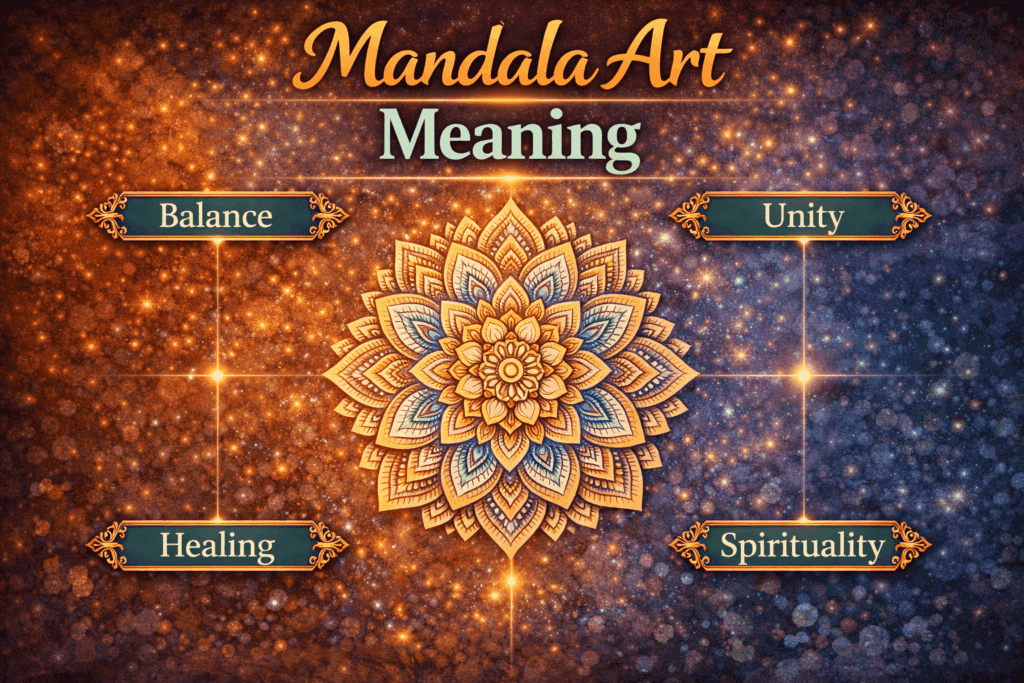
At its foundation, what is mandala art can be defined as a geometric art form created around a central point, expanding outward in balanced and symmetrical patterns. The term “mandala” originates from Sanskrit and means “circle,” but its meaning extends far beyond shape.
In philosophy and art, mandalas symbolize the universe, inner order, and the connection between the individual and the larger cosmic system. This is why understanding what is mandala art requires both visual appreciation and emotional awareness.
Many traditional artists and contemporary mentors, including practitioners associated with Rajni Dutta Art & Design, emphasize that mandala art is as much about discipline and mindfulness as it is about creativity.
Origins and Cultural Significance
- Hinduism and Buddhism:
- Mandalas are prominent in Hindu and Buddhist traditions, often used as tools for meditation and prayer.
- Tibetan sand mandalas are a famous example, painstakingly crafted and then destroyed to symbolize the impermanence of life.
- Native American and Aboriginal Cultures:
- Indigenous peoples have used circular designs to represent life cycles, nature, and spirituality.
- Modern Applications:
- In contemporary contexts, mandalas are used in art therapy, mindfulness practices, and home decor.
What Is Mandala Art in Simple Words?
For someone encountering it for the first time, what is mandala art in simple words can be explained as drawing repeated patterns inside a circle in a balanced way. These patterns may include lines, dots, petals, shapes, or symbols that repeat evenly around the center.
The simplicity of the concept is what makes mandala art accessible, while the depth of execution makes it endlessly fascinating. This is why teachers often begin mandala instruction by explaining what is mandala art in simple words, before moving into technique and symbolism.
Also Read:
Rangoli Art Services | Art Classes for Kids | Art Classes for Adults | Corporate Art Workshop | Art Party for Kids Birthday | Art Party for Adult Celebrations
Mandala Art Meaning: Symbolism That Goes Beyond Design
To truly appreciate mandala art, one must understand mandala art information. Every mandala tells a story, sometimes spiritual, sometimes emotional, sometimes purely personal.
Common symbolic elements include:
- Center point: the self or source of consciousness
- Circular structure: eternity, unity, wholeness
- Repeating patterns: rhythm, stability, balance
Color also plays a vital role in mandala art details:
- Blue reflects calmness and introspection
- Red conveys energy and strength
- Yellow represents clarity and learning
- Green symbolizes healing and renewal
Artists trained under structured systems, such as those followed in Rajni Dutta Art & Design workshops, are often taught to use color intentionally to enhance mandala art information meaning rather than randomly filling space.
Do try: Best Mandala Artist for Custom Artwork | Instant Price Calculator
Types of Mandala Art You Should Know
Understanding the types of mandala art helps learners choose the style that resonates with them. There are many mandala art types, each with its own purpose and aesthetic.
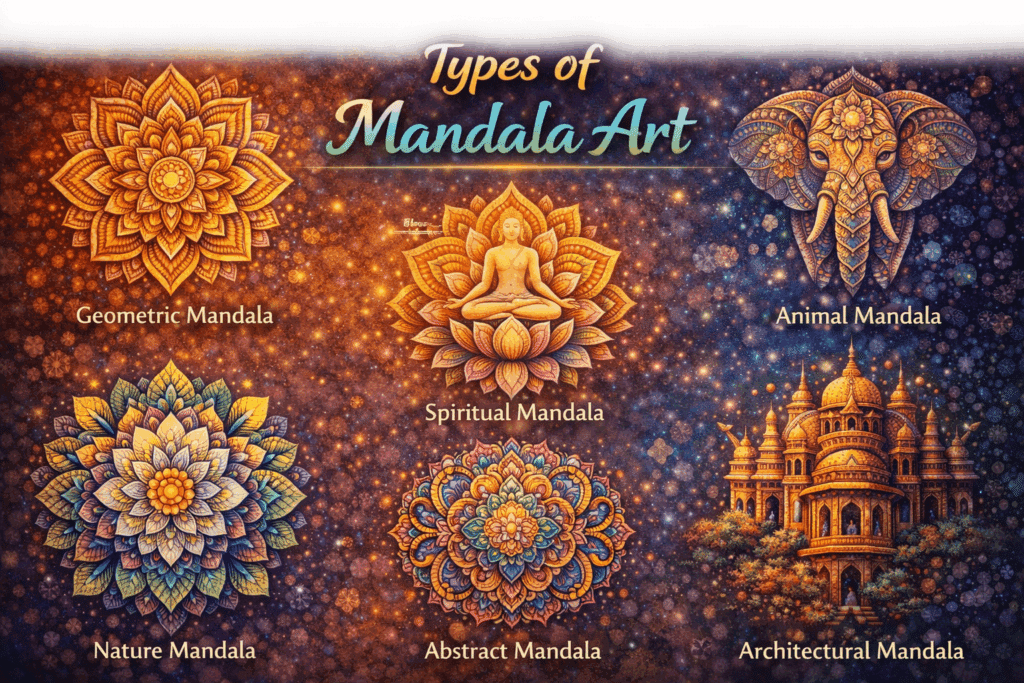
1. Traditional Art
Rooted in spiritual symbolism, these mandalas often feature lotus patterns, deities, and sacred geometry.
2. Healing Art
Designed for emotional well-being, healing mandalas use calming colors and soft repetition.
3. Modern Art
One of the most popular mandala art types today, modern mandalas blend traditional symmetry with contemporary themes. This style is widely taught in creative studios such as Rajni Dutta Art & Design, where tradition meets innovation.
4. Dot Art
Created using dots instead of lines, this form requires patience and precision.
5. Geometric Art
This style emphasizes mathematical accuracy and detailed structure.
Each of these types of mandala art showcases the versatility of the form.
Mandala Art Is From Which State in India?
The truthful answer is that mandala art does not originate from a single Indian state. Instead, it emerged from ancient Hindu and Buddhist traditions that developed across multiple regions of India.
Strong historical influences can be traced to:
- Bihar (Buddhist mandala traditions)
- Himachal Pradesh and Ladakh (Tibetan mandala influence)
- Rajasthan and Gujarat (geometric and folk symmetry)
So, when discussing mandala art is from which state in India, it is more accurate to say that mandala art is rooted in India’s spiritual heritage rather than regional boundaries.
Mandala Art Details: What Defines a Good Mandala
Key mandala art details that distinguish high-quality work include:
- Strong radial symmetry
- Consistent spacing
- Clean line work
- Balanced pattern progression
- Thoughtful color selection
Experienced mentors often stress this mandala art information to help students move from decorative drawing to refined artwork.
Why Mandala Art Is So Popular Today?
Modern lifestyles have renewed interest in mindfulness-based activities, which explains the growing curiosity around this art.
Mandala art is popular today because it:
- Reduces stress
- Improves focus
- Encourages patience
- Requires minimal materials
This blend of simplicity and depth keeps mandala art relevant across age groups.
Have a look: Best Mandala Art Classes | In-Studio or Online Live or Recorded
How to Create Mandala Art: A Beginner’s Approach
Understanding what is mandala art becomes more meaningful when practiced.
Materials Needed
- Paper or canvas
- Pencil and eraser
- Compass and ruler
- Fine liners
- Coloring tools
Basic Steps
- Mark a center point
- Draw concentric circles
- Divide the circle evenly
- Build patterns outward
- Add details and color
This structured process reflects the essence of mandala art details and discipline.
Practical Tips for Beginners
- Start simple: Begin with basic shapes and patterns.
- Use templates: Pre-drawn guides can help you focus on coloring and details.
- Practice mindfulness: Let the process be meditative and stress-free.
Mandala Art in Everyday Life
Mandala art is no longer confined to spiritual spaces. Today, it appears in:
- Home décor and murals
- Yoga and meditation studios
- Fashion and textile design
- Educational art programs
Institutions like Rajni Dutta Art & Design play a role in making mandala art accessible by blending traditional methods with modern presentation.
Learning Mandala Art Through Guided Practice
Many learners search for clarity on what is mandala art in simple words before joining classes. Structured guidance helps bridge that gap.
Mandala art classes conducted under experienced artists provide:
- Step-by-step learning
- Pattern-building techniques
- Color theory understanding
- Creative confidence
This approach transforms curiosity into skill.
Mandala Art Classes by Rajni Dutta Art & Design
If you’re eager to dive deeper into the world of mandala art, consider joining mandala art classes offered by Rajni dutta art & Design. Known for her expertise in folk art fusion, Rajni Dutta provides:
- Comprehensive Workshops: Learn the fundamentals of mandala creation, including symmetry, patterns, and color theory.
- Customized Guidance: Suitable for all skill levels, from beginners to advanced artists.
- Creative Techniques: Explore unique ways to blend traditional mandala designs with modern art styles.
- Relaxing Environment: These classes are designed to be both educational and therapeutic, helping you unwind while expressing your creativity.
Whether you want to enhance your artistic skills or find a new way to relax, these classes offer an enriching experience. Visit Rajni Dutta Art’s official website or contact directly for upcoming schedules and registration details.
Conclusion
So, what is mandala art today?
It is a harmonious blend of tradition, creativity, structure, and mindfulness. Whether you are exploring mandala art meaning, learning about mandala art types, or seeking reliable mandala art information, mandala art offers a path inward, toward balance and awareness.
Through consistent practice and thoughtful guidance, mandala art becomes more than design. It becomes a way of seeing.
Mandala art classes / Learn mandala art
Rajni Dutta Art & Design / mandala art by Rajni Dutta / Instagram